Unlock Endless Fun and Sharpen Logic With Sudoku Today
What Makes Sudoku a Timeless Puzzle Game
Sudoku is one of the most popular logic puzzle games in the world. Millions of players enjoy Sudoku every day because it offers a perfect balance of entertainment and mental challenge. Unlike word games or trivia games that depend on vocabulary or general knowledge, Sudoku focuses entirely on logical thinking. Every puzzle presents a unique challenge that can be solved through reasoning and careful analysis.
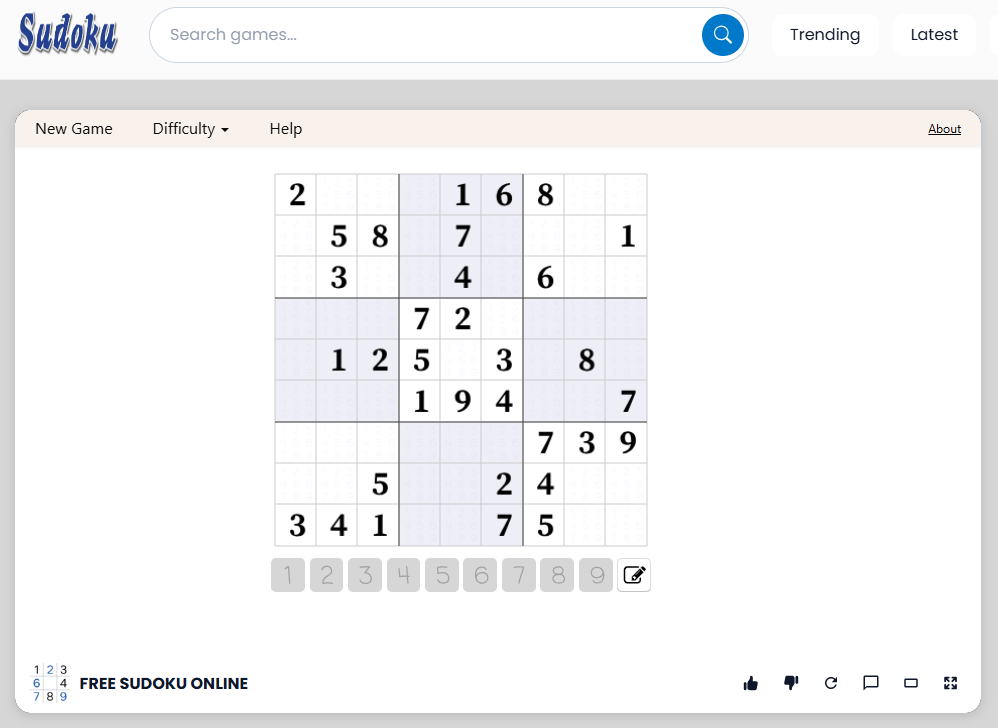
The standard Sudoku grid contains nine rows and nine columns. The grid is divided into nine smaller sections, each containing nine cells. The goal is simple: fill every empty cell with a number from one to nine while following specific rules. Each number can appear only once in every row, column, and section.
This straightforward concept makes Sudoku easy to learn, yet the increasing complexity of advanced puzzles creates endless opportunities for growth and improvement.
The Global Appeal of Sudoku
One reason behind the success of Sudoku is its universal accessibility. Players of different ages, cultures, and backgrounds can enjoy the game without language barriers. Numbers serve as symbols rather than mathematical values, making Sudoku suitable for almost everyone.
Many people start with beginner puzzles and gradually progress toward more difficult challenges. This sense of development keeps the experience fresh and rewarding. Whether played on paper, mobile devices, or online platforms, Sudoku remains a favorite activity for puzzle enthusiasts around the world.
How Sudoku Works
Understanding the basic rules is the first step toward mastering Sudoku. Every puzzle begins with several numbers already placed on the grid. These clues provide enough information to complete the entire puzzle logically.
Basic Rules of Sudoku
A valid Sudoku puzzle follows three essential rules. Each row must contain the numbers one through nine without repetition. Each column must also contain the numbers one through nine without duplication. Every three-by-three section must include all nine numbers exactly once.
Players examine the existing clues and determine where missing numbers belong. Success depends on observation, pattern recognition, and logical deduction rather than guessing.
Different Difficulty Levels
Sudoku puzzles are available in multiple difficulty levels. Beginner puzzles contain more starting numbers and often require only basic techniques. Intermediate puzzles demand deeper analysis and more strategic thinking.
Advanced and expert puzzles challenge players with complex patterns and fewer initial clues. These puzzles often require specialized solving methods and greater patience. As skill levels improve, players can enjoy increasingly sophisticated challenges.
Benefits of Playing Sudoku Regularly
Sudoku offers more than simple entertainment. Many players choose Sudoku because of the mental benefits associated with consistent puzzle solving.
Strengthening Logical Thinking
Every Sudoku puzzle requires logical reasoning. Players must analyze available information, eliminate impossible options, and identify the correct placement for each number. Repeating this process strengthens critical thinking skills over time.
Logical problem solving is valuable in many areas of life. Regular Sudoku practice can help individuals become more comfortable with structured thinking and analytical decision-making.
Improving Concentration
Modern life often involves constant distractions. Sudoku encourages focused attention and sustained concentration. Solving a puzzle requires players to stay engaged with the grid and carefully evaluate each possibility.
Many people use Sudoku as a relaxing activity that helps reduce mental clutter. Spending time on a puzzle can create a sense of calm while keeping the mind actively engaged.
Encouraging Patience and Persistence
Not every Sudoku puzzle can be solved quickly. Difficult grids may require several attempts and careful reconsideration of previous assumptions. This process encourages patience and persistence.
The satisfaction of completing a challenging puzzle often comes from overcoming obstacles through determination and logical effort.
Effective Strategies for Solving Sudoku
While beginners may rely on trial and error, experienced players use proven strategies to solve puzzles efficiently.
Scanning Rows and Columns
One of the most common techniques involves scanning rows and columns for missing numbers. By identifying which numbers are already present, players can narrow down possible placements for empty cells.
This method forms the foundation of most Sudoku solving strategies and remains useful across all difficulty levels.
Using Elimination Techniques
Elimination is another essential approach. Players examine a specific cell and determine which numbers cannot fit based on existing values in the same row, column, and section.
As possibilities become more limited, the correct answer often becomes clear. Consistent use of elimination can significantly improve solving speed and accuracy.
Recognizing Patterns
Advanced Sudoku players learn to recognize recurring patterns within the grid. Certain arrangements of numbers create predictable outcomes that help reveal hidden solutions.
Pattern recognition becomes increasingly important in difficult puzzles. Developing this skill allows players to tackle challenges that might otherwise appear overwhelming.
Sudoku in the Digital Age
Technology has transformed the way people experience Sudoku. Traditional newspapers and puzzle books remain popular, but digital platforms have expanded access to Sudoku for players worldwide.
Online Sudoku Platforms
Online Sudoku websites offer thousands of puzzles across various difficulty levels. Many platforms include helpful features such as hints, timers, progress tracking, and daily challenges.
These tools create a more interactive experience and help players monitor their improvement over time.
Mobile Sudoku Applications
Smartphone applications make Sudoku available anytime and anywhere. Players can enjoy quick puzzles during commutes, breaks, or leisure time. Mobile apps often provide customizable settings, allowing users to choose preferred difficulty levels and gameplay styles.
This convenience has contributed to the continued popularity of Sudoku among modern audiences.
Why Sudoku Remains Popular After Decades
Many puzzle trends appear briefly and disappear, but Sudoku continues to attract new generations of players. The combination of simplicity and depth gives Sudoku lasting appeal.
Every puzzle presents a fresh challenge while maintaining familiar rules. Players can continuously improve their skills, explore advanced strategies, and enjoy the satisfaction of logical problem solving. The game requires no special equipment, no extensive preparation, and no language-specific knowledge.
For these reasons, Sudoku remains one of the most respected and widely played puzzle games in the world.
Conclusion
Sudoku is much more than a simple number puzzle. It is a rewarding mental exercise that promotes logical thinking, concentration, patience, and problem-solving skills. With accessible rules, endless puzzle variations, and widespread availability across digital and traditional formats, Sudoku continues to captivate players of all ages.
Whether you are a beginner looking for a fun challenge or an experienced puzzle enthusiast seeking advanced grids, Sudoku offers a satisfying experience that never becomes outdated. The next puzzle is always waiting, ready to test your logic and provide hours of engaging entertainment.